Iran Nuclear Threat: Capability, Timeline, and Civilian Risk
Iran nuclear threat assessments point to a high-capability, high-uncertainty environment where enrichment and infrastructure resilience are the main technical concerns. The biggest civilian effects are indirect but meaningful: sanctions escalation, oil volatility, security spending shifts, and increased cyber and regional incident risk when diplomatic channels weaken.
Iran nuclear threat analysis is often presented as a binary question, but the real issue is a sequence of probabilities: enrichment pace, detection quality, political intent, and whether deterrence dynamics hold under stress. The exact status can shift faster than official summaries because technical indicators and political signals move on different timelines. For civilian planning, what matters most is not predicting one exact outcome but monitoring the indicators that consistently precede economic and security spillovers.
Public interest is high because this topic connects directly to everyday concerns already covered across this site, including fuel-cost exposure, economic drag, cyber posture, and broader escalation probability in the WW3 risk assessment. A credible deterioration in nuclear risk does not only change military planning; it also changes sanctions, insurance, transport, and financial volatility assumptions almost immediately.
Current Capability Snapshot
The current capability picture is best understood as advanced fuel-cycle capacity with contested transparency, not a fully verified deployed weapon state. Enrichment level, stockpile composition, centrifuge performance, and facility hardening all influence technical potential, while inspections and intelligence quality shape confidence. A key challenge for outside observers is that absence of confirmed deployment is not the same as absence of risk, and high-confidence claims in either direction are often overstated in real-time media cycles.
Capability and intent are different variables. A system can have substantial technical capability while decision-makers still stop short of weaponization due to deterrence logic, diplomatic incentives, or internal political constraints. Conversely, a political decision can compress timelines if capability is already near critical thresholds. That is why risk models track both engineering indicators and political signaling behavior.
Breakout Time vs Weaponization Time
One common public misunderstanding is treating breakout time and deployable weapon time as the same concept. Breakout estimates usually refer to fissile-material thresholds. Weaponization adds additional engineering, integration, and testing hurdles, each with detection and disruption opportunities. This does not make risk small; it makes risk multidimensional.
In civilian terms, the distinction matters because markets can react sharply to breakout concerns alone. You do not need confirmed weapon deployment for sanctions and energy volatility to rise. In practice, the first civilian-facing impacts usually appear in commodity and policy channels: tighter sanctions proposals, wider risk premiums in energy benchmarks, and higher transport or financing costs tied to regional security uncertainty.
| Stage | What It Measures | Main Uncertainty | Civilian Signal |
|---|---|---|---|
| Breakout threshold | Potential fissile material pace | Stockpile transparency | Oil risk premium rises |
| Weaponization | Device design and assembly pathway | Covert engineering visibility | Sanctions escalation pressure |
| Delivery integration | Practical deployment architecture | Testing and command control data | Regional military alert shift |
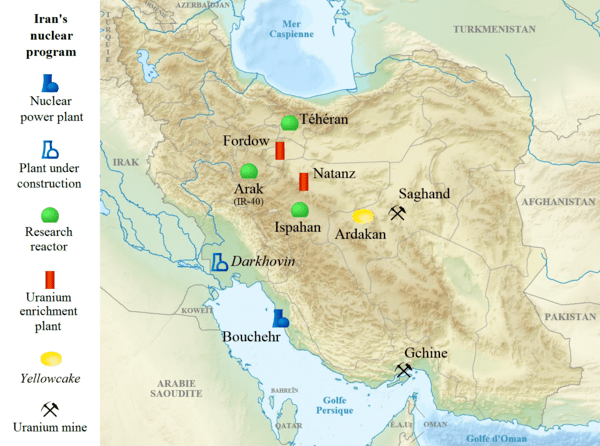
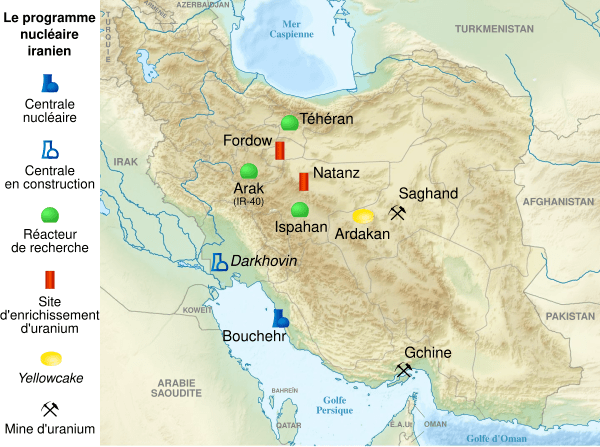
Facilities That Matter Most
Facility-level understanding improves risk interpretation because not all nodes carry equal strategic weight. Enrichment sites, conversion points, and support infrastructure have different resilience characteristics. Hardening, redundancy, and repair pathways can preserve or restore capability after disruption, which is why assessments now focus on network resilience rather than single-site status.
Natanz and Fordow are frequently highlighted because enrichment concentration and hardening interact with deterrence choices. A facility can be technically damaged and still leave a meaningful residual capability if feedstock, components, and technical teams can reconstitute operations elsewhere. This is why one-day battle damage claims rarely settle long-run risk questions.
Delivery Systems, Deterrence, and Regional Dynamics
Nuclear risk does not exist in isolation; it sits inside a broader deterrence ecosystem involving missile capabilities, regional air and missile defense, alliance commitments, and crisis communication channels. Civilian readers should think in terms of escalation ladders: what actions force counter-actions, and where do decision-makers still have off-ramps. The ladder is shaped by military capability, but also by signaling discipline and diplomatic access during crises.
A practical implication is that regional incident frequency can be as important as technical nuclear updates. Frequent military incidents increase miscalculation probability, which can trigger sanctions and market responses even when nuclear indicators are unchanged. In other words, deterioration can come from interactions around the core issue, not only from the core issue itself.
Early-Warning Indicators Civilians Should Track
You do not need classified access to track meaningful risk movement. High-signal indicators include abrupt changes in inspection access, acceleration in sanctions rounds tied to procurement networks, sustained benchmark oil repricing, and public alerts from major security agencies. The most reliable method is to track a basket of indicators rather than any one headline.
- Inspection access updates. Reduced verification confidence is often the earliest strategic warning.
- Sanctions cadence. Rapid, repeated designations usually indicate rising policy urgency.
- Energy and freight volatility. Market pricing often reacts before political language stabilizes.
- Regional incident tempo. More incidents raise miscalculation risk even absent new nuclear milestones.
- Official preparedness guidance. Practical guidance shifts are more informative than political rhetoric.
The most useful civilian question is not "Is there an immediate apocalypse?" but "Are the indicators that historically precede sanctions and energy shocks moving in the wrong direction?" That framing keeps planning grounded and actionable.
Uncertainty Matrix: What We Know vs What We Infer
Public debate often collapses uncertainty into certainty because certainty is easier to headline. A more rigorous approach separates observed facts, high-confidence inferences, and low-confidence claims. Observed facts include known facilities, publicly reported enrichment levels, official statements, and verifiable satellite changes. High-confidence inferences include likely resilience pathways and sanction responses under familiar escalation patterns. Low-confidence claims usually involve intent timelines and undisclosed infrastructure assumptions that cannot be independently validated in real time.
Why does this matter for civilians? Because policy and market overreaction is most likely when low-confidence claims are presented as settled truth. A disciplined uncertainty matrix helps households and firms avoid expensive emotional decisions. It also improves update quality: if new information arrives, you can adjust one assumption without rebuilding your entire risk model.
| Information Type | Confidence Level | Update Frequency | Use in Planning |
|---|---|---|---|
| Verified facility and policy releases | High | Scheduled / event-driven | Primary baseline |
| Cross-source analytic estimates | Medium | Periodic | Scenario weighting |
| Single-source dramatic claims | Low | Headline-driven | Do not use for immediate decisions |
Common Myths That Distort Civilian Decisions
Myth 1: Any nuclear headline means immediate domestic danger. Reality: the first effects are usually market and policy channels, not immediate direct physical impact for most US households. Myth 2: Technical capability equals inevitable deployment. Reality: capability and political decision are distinct, and deterrence mechanisms still shape outcomes. Myth 3: One strike or one deal permanently resolves risk. Reality: risk is dynamic and depends on verification, adaptation, and follow-on policy behavior.
Replacing myths with process-based monitoring is the highest-value upgrade civilians can make. Track official sources, update assumptions monthly, and avoid one-day narrative traps. This method is less emotionally satisfying than certainty claims, but it is more accurate and financially safer.
Economic Transmission Map: From Nuclear Risk to Household Cost
Strategic risk becomes economic reality through identifiable channels. The first channel is commodity pricing: benchmark energy markets reprice probability of disruption and sanctions intensification. The second is shipping and insurance: transport operators update risk assumptions and premiums, which increase landed costs across many categories. The third is policy behavior: tighter export controls and financial compliance checks add friction, delays, and administrative costs. These three channels can move within days of a major risk shift, often before official inflation reports reflect them.
Understanding transmission channels helps households and firms prioritize actions. If energy and freight move first, transport-heavy spending and inventory timing deserve immediate attention. If compliance costs are rising, international procurement workflows should be reviewed. If confidence weakens broadly, preserving liquidity and avoiding discretionary leverage becomes more important than chasing short-term market narratives.
How Fast Can Risk Conditions Change?
Nuclear-risk conditions can change on three different clocks. The technical clock moves with facility and enrichment developments. The political clock moves with diplomatic rounds, sanctions decisions, and domestic incentives. The market clock moves fastest, often repricing expectations before either technical or political clarity arrives. Because these clocks are unsynchronized, confusion is normal. Good planning assumes lag and mismatch rather than expecting one clean signal.
A practical approach is to assign thresholds by clock. For the market clock, monitor benchmark volatility and freight proxies weekly. For the political clock, review official releases and mediator updates at each event window. For the technical clock, rely on cross-validated institutional analysis rather than daily rumor cycles. This layered approach improves decision quality and reduces overreaction.
What De-Escalation Looks Like in Real Data
The Iran nuclear threat conversation tends to focus on escalation signals, but civilian planning also needs a clear model for de-escalation. De-escalation is not a single headline. It is usually a sequence: more consistent technical access, slower sanctions cadence, lower incident tempo in regional corridors, and reduced premium in energy and freight indicators. If only one of those improves while others deteriorate, the system is not yet stabilizing; it is merely rotating pressure from one channel to another.
Readers often ask whether one positive diplomatic statement should trigger major household or business decisions. In most cases, no. Durable de-escalation is visible through repeated confirmation over several update cycles. That means observing both policy behavior and market behavior together. This is the same logic used in the site's negotiation tracker and sanctions watch page: rhetoric can change quickly, but implementation and pricing behavior reveal whether risk is truly receding.
| Signal Type | Escalation Pattern | De-Escalation Pattern | Planning Interpretation |
|---|---|---|---|
| Inspection access | Interruptions or ambiguity | Regularized and verifiable | Confidence improves only after repeated confirmations |
| Sanctions cadence | Frequent new rounds | Slower cadence and narrower scope | Lower near-term policy shock probability |
| Incident tempo | Rising regional incidents | Sustained reduction in incidents | Miscalculation risk starts to fall |
| Energy and freight risk premium | Persistent elevation | Gradual normalization | Consumer-cost pressure should ease with lag |
Household and Small-Business Playbook Under Nuclear-Risk Stress
When the Iran nuclear threat narrative accelerates, the best response is disciplined sequencing rather than sweeping one-day changes. Households should first secure short-horizon resilience: a transport budget buffer, essential-medication continuity, and a practical preparedness baseline that avoids panic buying. Small businesses should do the equivalent operationally by identifying vulnerable suppliers, defining alternate shipping routes, and clarifying who approves rapid purchasing or inventory changes when volatility jumps.
The second layer is financial and informational discipline. Households can set trigger-based rules tied to objective indicators, such as benchmark fuel prices or confirmed sanctions updates, and avoid ad-hoc reactions to social media rumors. Businesses can predefine margin protection actions and communication templates for customers if lead times extend. These steps are boring by design, but they outperform improvised decisions during uncertainty spikes.
The third layer is monthly reassessment. Risk conditions rarely move in one direction for long. A structured monthly review that compares official guidance, market indicators, and supply-chain performance helps families and firms avoid both panic and complacency. If conditions worsen, you already know which actions activate first. If conditions improve, you can unwind expensive defensive measures gradually instead of snapping back too fast.
Frequently Asked Questions
Open-source assessments indicate high technical capability but no universally confirmed deployed weapon status. The risk center is speed, transparency, and strategic intent under pressure.
Breakout time estimates how fast fissile material thresholds could be reached. It does not fully capture weaponization and delivery integration, which are separate and uncertain stages.
Because nuclear risk shifts sanctions, energy pricing, shipping confidence, and security posture. Those channels influence household budgets and business planning faster than most people expect.
Verified technical implementation with stable inspection access and reduced incident frequency is a stronger de-escalation signal than optimistic speeches alone.
Related Blog Explainers
- IAEA Safeguards and Iran Monitoring: What the Documents Actually Say
- UN Resolution 2231 and Snapback: A Plain-Language Explainer
- How to Read War Opinion Polls Without Getting Misled
- Browse all blog explainers